

See Our Latest Finance Deals
Spread the cost of your home improvement Interest Free Over 2 Or 3 Years*

4.9/5 - 611 Reviews
Read Reviews
100% - 88 Reviews
Read Reviews
4.9 - 635 Reviews
Read Reviews Read ReviewsSpread the cost of your home improvement Interest Free Over 2 Or 3 Years*

Proven performance, trusted by hundreds of customers - the SleekSkin finish!

Premium Window Shutters for Style & Privacy

Transform your home with new windows, doors, shutters or a conservatory - pay nothing until 2027.

Adding a conservatory is an exciting way to create more living space in your home. Whether you’re dreaming of a bright dining area, a garden room, or somewhere to relax with a book, a conservatory can transform how you use your property. However, before you start planning the layout and choosing your furniture, there’s an important question to answer: do you need planning permission?
The planning rules on conservatories can feel confusing at first. You’ve probably heard conflicting information from friends, neighbours, or online forums. Some people say you don’t need permission at all, while others warn about complex regulations and applications. The truth is that it depends on several factors specific to your home and your plans.
Most conservatories in the UK fall under what’s called ‘permitted development’, which means you can build them without applying for planning permission. However, there are exceptions and limitations to be aware of.
This guide will walk you through the planning rules on conservatories in straightforward terms. We’ll explain when you do and don’t need permission, what other regulations apply, and how we can help you through the process.
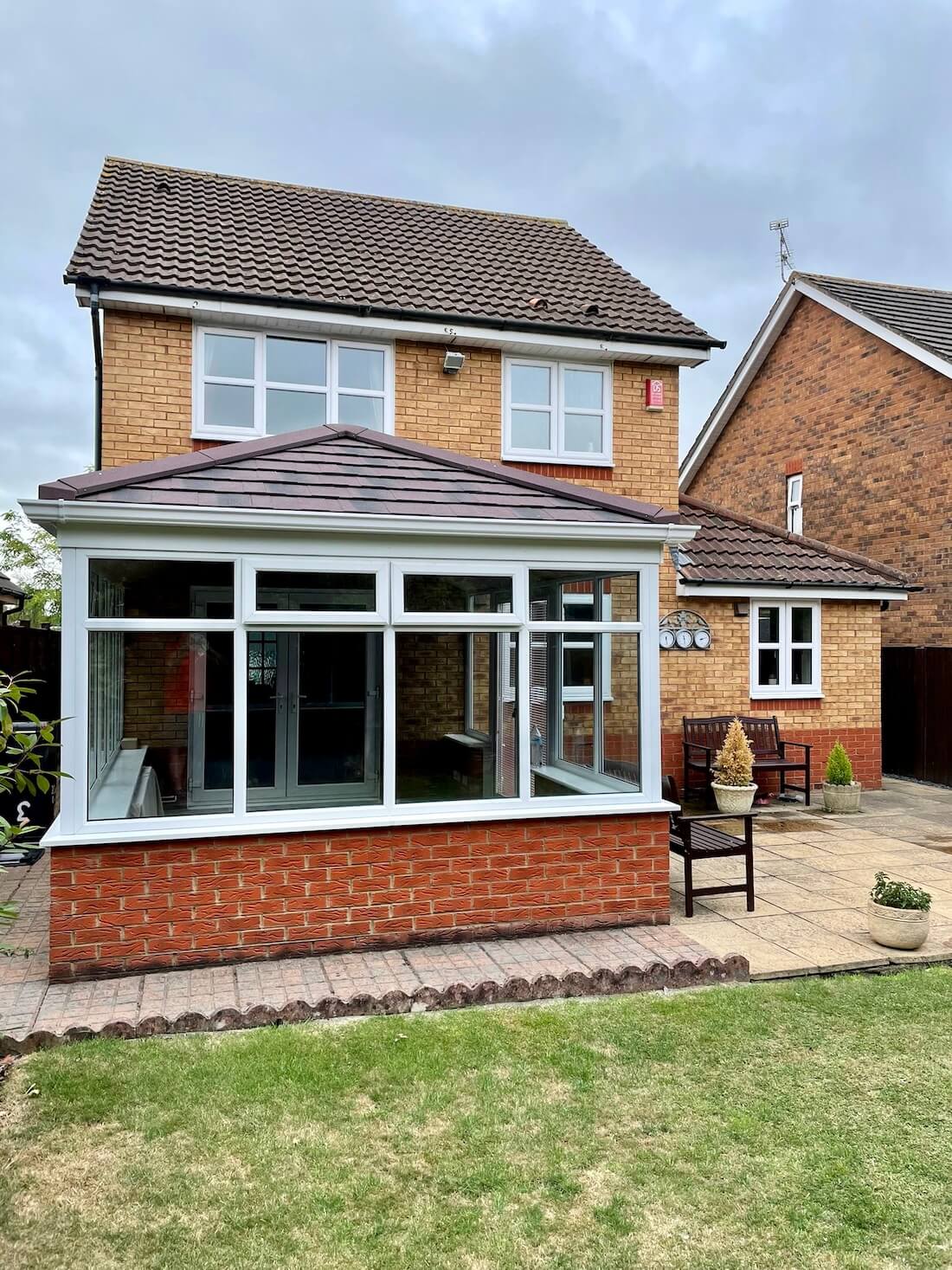
While most conservatories can be built under permitted development rights, there are several situations where you’ll likely need to submit a planning application to your local authority.
If your home is a listed building, you’ll need listed building consent for any alterations, including adding a conservatory. Listed buildings are protected because of their historical or architectural importance, and any changes need careful consideration. You’ll need to work closely with your local council to ensure your plans are appropriate.
Properties in conservation areas face additional restrictions. While you may still benefit from some permitted development rights, these are more limited than for properties elsewhere. You’ll often need planning permission for conservatories that wouldn’t require it in other locations.
Even if your property isn’t listed or in a conservation area, your conservatory might need planning permission if it exceeds certain size limits. If your proposed conservatory extends beyond the width of the original house, this could trigger the need for permission. Similarly, if the height of your conservatory exceeds what’s allowed under permitted development rules, you’ll need to apply.
How close your conservatory is to the boundary can affect whether planning permission is required. If the structure sits too close to the boundary line, or if bringing it closer would exceed permitted development limits, you may need to apply for full planning permission.
The area of land covered by extensions is calculated cumulatively. If you’ve already extended your home since 1948 (or since the original house was built, if that was later), this will affect how much more you can add under permitted development. You’ll need to consider any previous building work when calculating whether your new conservatory falls within the limits.
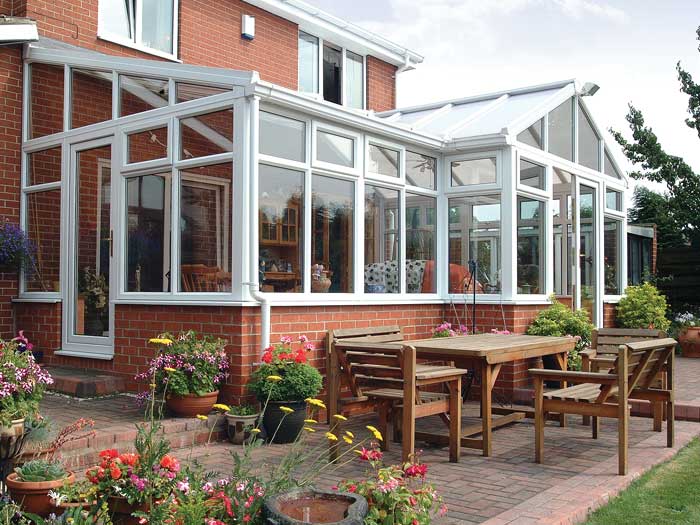
The good news is that most homeowners can add a conservatory without going through the planning application process, thanks to permitted development rights.
For most homes, you can add a conservatory at the rear without planning permission if it meets specific criteria. Detached houses are allowed a slightly larger rear projection than semi-detached or terraced homes. The important thing is ensuring your conservatory stays within the limits for height, rear projection, and overall coverage of your garden land.
Your new conservatory will usually be fine under permitted development if the highest part of the roof is no higher than the highest part of the existing house. If any part of the structure is within 2 metres of a boundary, the eaves height must not exceed 3 metres, which is an important consideration when planning the design.
Extensions, including side extensions, cannot project beyond the front wall of your home that faces a highway under permitted development. Anything built forward of this elevation will require planning permission. Conservatories are usually added to the rear or, in some cases, the side of a property, provided they sit behind the principal elevation.
At Emerald Windows, we understand that planning rules on conservatories can feel overwhelming. With over two decades of experience installing conservatories across Swindon, Wiltshire, and the surrounding areas, we’ve guided countless homeowners through this process.
When you contact us about a new conservatory, we’ll assess your property and discuss your plans with you. We can advise whether your project falls under permitted development or whether your design will need planning permission.
We offer a comprehensive range of conservatories to suit different homes and preferences. Each one can be designed to meet your specific needs while complying with all relevant regulations.
We provide several different conservatory styles, each with its own character:
Victorian conservatories feature a distinctive bay front and ornate ridged roof, perfect for traditional properties.
Edwardian conservatories have a square or rectangular shape that makes the most of your floor space.
Gable conservatories have a front that remains upright rather than sloping back to the centre, creating a striking appearance and a sense of height inside.
Lean-to conservatories have a simple, practical design with a roof that slopes away from your home. They’re ideal for properties with limited space or height restrictions, like bungalows.
P-shaped conservatories combine a lean-to section with a Victorian or Edwardian style, creating a larger home extension with distinct areas.
T-shaped conservatories project further from your property and offer a central section flanked by two wings, perfect for creating separate zones.
Your choice of conservatory roof affects both appearance and performance.
Glass roofs fill your conservatory with natural light and offer a traditional aesthetic. Our modern glass is highly energy-efficient, helping to keep your conservatory comfortable throughout the year.
Tiled roofs give your conservatory more of an extension feel and provide excellent insulation. They’re perfect if you want your conservatory to function as a year-round living space.
Lantern roofs can be added to tiled roofs to create a focal point and flood your conservatory with light from above. They combine the best of both worlds – the insulation of a solid roof with the brightness of glazing.
If you want something between a traditional conservatory and a full home extension, an orangery might be perfect. Orangeries feature more brickwork than a conservatory, with a flat roof around the perimeter and a glazed lantern in the centre.
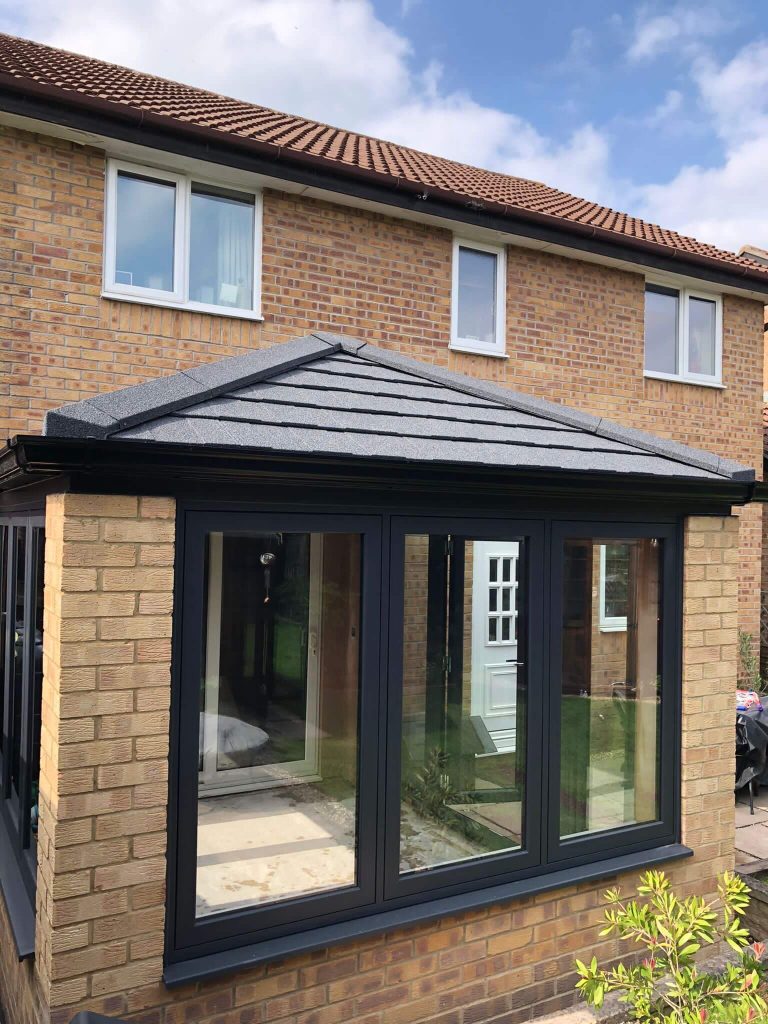
Understanding the planning rules on conservatories is the first step toward creating the extra space you’ve been dreaming of. While the regulations might seem complex, most homeowners find they can proceed under permitted development, making the process much more straightforward than they expected.
We’re here to help you through every stage, from initial advice about regulations to designing your perfect conservatory and professional installation.
If you’re considering a conservatory and want to discuss your options or receive a free, no obligation quote, we’d be happy to help. You can:
Most small conservatories don’t need planning permission if they meet permitted development requirements. The key factors are the size (measured in square metres), height, and distance from boundaries. However, if you live in a listed building or conservation area, different rules apply.
Planning permission relates to whether you can build something in a particular location and how it affects the area. Building regulations approval ensures your construction meets safety and performance standards.
Yes, many homeowners upgrade their conservatory by replacing the roof and improving insulation. We can help you understand what’s involved and create a comfortable, usable space.
We pride ourselves on the hundreds of customer reviews that we have collected over our many years of trading. Why not read some of our testimonials yourself, and see how our customers have rated their experience with our service.
See All ReviewsEmerald windows were brilliant. The patio door was removed and replaced with a window. All work was carried out from bricking up the outside to plastering the inside. Great work...

We worried about choosing a window company. We looked at all the usual national firms but we preferred the feel of a smaller local family run business as the rep...
Very pleased with the whole process from Mark letting us see and touch the product in the showroom in Swindon (many don't!), to a transparent price breakdown, no "buy now...

Highly recommend Emerald Windows and Doors; new Front and back doors fitted yesterday. Cannot praise Mark the Fitter enough, courteous, friendly and very helpful. Top job with attention to detail...

Emerald windows have just installed a new composite front door to our property. We are very pleased with the product and the installers were polite, professional and have carried out...