


See Our Latest Finance Deals
Spread the cost of your home improvement Interest Free Over 2 Or 3 Years*

4.9/5 - 604 Reviews
Read Reviews
100% - 88 Reviews
Read Reviews
4.9 - 581 Reviews
Read Reviews Read ReviewsSpread the cost of your home improvement Interest Free Over 2 Or 3 Years*

Proven performance, trusted by hundreds of customers - the SleekSkin finish!

Premium Window Shutters for Style & Privacy

Transform your home with new windows, doors, shutters or a conservatory - pay nothing until 2027.

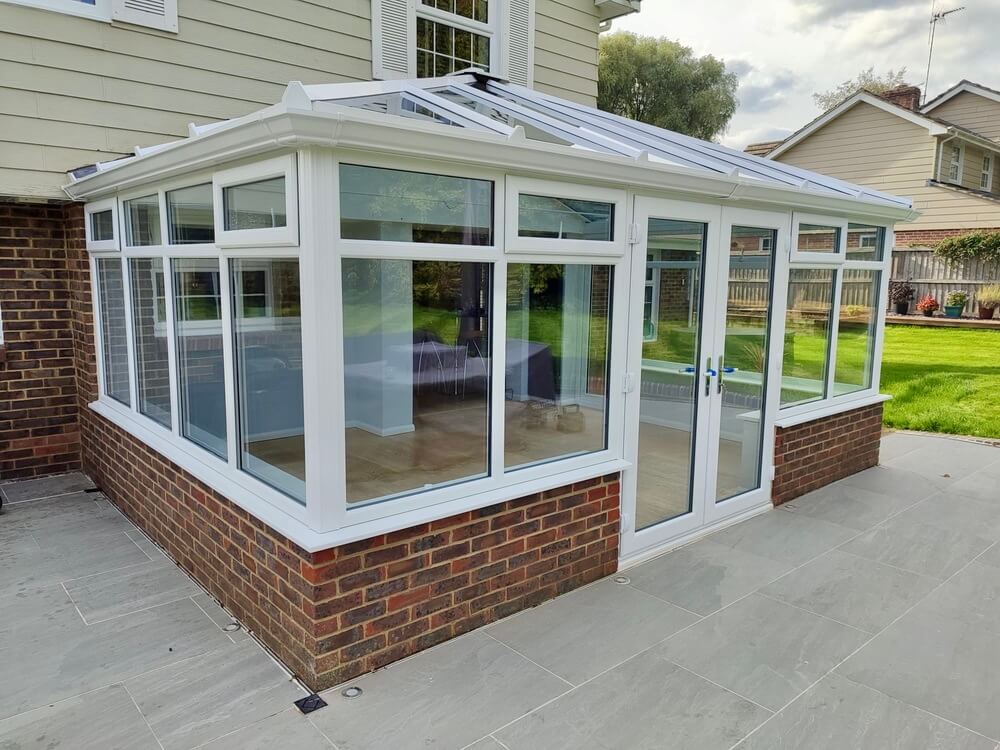
In most cases, you do not need planning permission for a conservatory. As long as your project falls within permitted development guidelines, you can go ahead without submitting a formal application.
However, there are exceptions, and factors such as the size of the structure, your property type, and whether you live in a conservation area or listed building can all affect the rules that apply to you.
At Emerald Windows, we know that adding a conservatory is one of the most impactful ways to transform your home, but the technical side can often feel like a hurdle.
This guide breaks down the planning rules for conservatories into straightforward, easy-to-understand terms. We will explain exactly when permission is required, and outline the relevant building regulations.
In the majority of cases, a rear conservatory is treated as an “addition” to the rest of the house and is classified as permitted development. This means you can often build without submitting a formal application to the planning department, provided your project meets specific criteria.
However, these permitted development rules can vary. For example, if you live in a listed building or within a conservation area, these rights are often restricted or removed entirely. In these instances, you will almost certainly need to seek formal approval before any building work begins to ensure the character of the area is protected.
We can advise whether your project falls under permitted development or whether your design will need planning permission.
It is worth noting that at Emerald Windows, we begin the quotation process once any required planning permission has been granted. If permission is still pending, we recommend waiting until formal approval is in place before proceeding – this ensures that any quote we provide accurately reflects your confirmed project scope and protects you from unnecessary delays or costs.
To qualify for permitted development, your conservatory must adhere to a set of national rules.
The most important thing to remember is the concept of the original house. This refers to the property as it stood on 1st July 1948 or as it was first built. Under these rights:
There are specific dimensions you must stay within to avoid a full planning application. Currently, the rules for a single storey rear extension are:
If you want to go bigger, you may be able to use the “Prior Approval” scheme, which allows up to 8 metres for a detached house and 6 metres for others, subject to a neighbour consultation. Additionally, if the conservatory is within 2 metres of a boundary, the eaves height cannot exceed 3 metres.
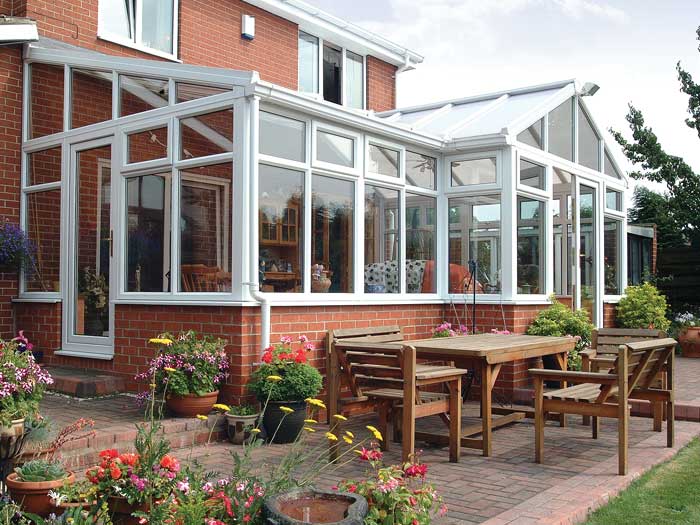
Even if you don’t need planning permission, you must still consider building regulations.
A common mistake is removing the doors between the rear wall of the original house and the conservatory without a thermal assessment.
To remain exempt from most building rules, the conservatory must be under 30 square metres in floor area, be separated from the house by external-quality doors, and have an independent heating system. If you plan to create an open-plan space, you will need building regulations approval to ensure the energy efficiency of your home isn’t compromised.
You may come across conservatory companies that claim they can take care of planning permission on your behalf, presenting it as a straightforward part of their service. While this can sound reassuring, it is important to be cautious.
We regularly hear from homeowners who were told everything was in order, only to later discover that the proper permissions were never actually obtained. This can result in enforcement action from the local council, significant fines, and in serious cases, being required to remove the structure entirely – at the homeowner’s expense.
Planning permission is a legal matter between you and your local planning authority. No third party can guarantee approval, and responsibility ultimately rests with the property owner. If a company is vague about the process, unable to provide official documentation, or pressuring you to proceed before permission is confirmed, treat this as a serious warning sign.
Always request written confirmation that permission has been formally granted before any work begins.
You will generally need to submit a full application to your local council if:
If your project does fall outside of permitted development, don’t panic. The process is manageable with the right approach:
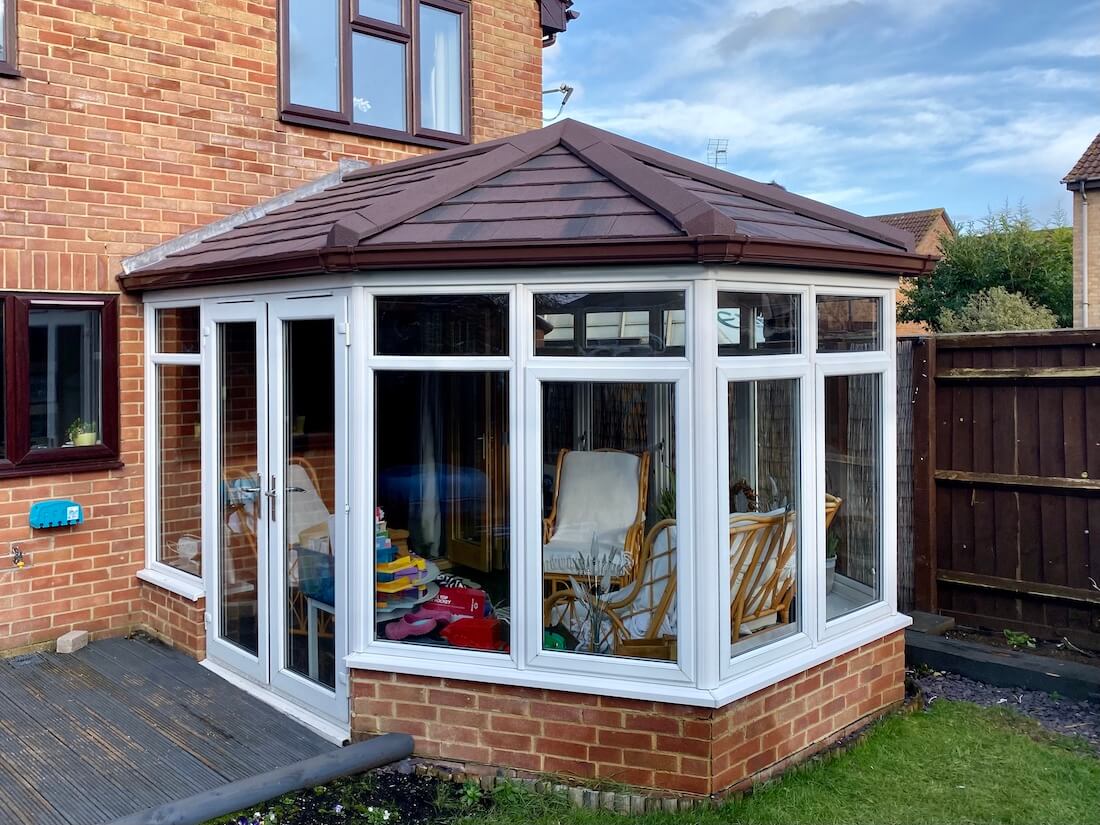
Navigating conservatory planning doesn’t have to be a solo journey. Getting a professional team involved early ensures your design is not only beautiful but fully compliant with all local laws.
At Emerald Windows, we provide tailored consultations to help you understand exactly what is possible for your property, helping you avoid costly mistakes and ensuring your new space is built to the highest standards.
Ready to start your journey?
Whether you’re dreaming of a sun-drenched garden room or a practical new dining area, we’re here to help. Our team has the local knowledge and technical expertise to guide you through every step of the process.
Call Emerald Windows today on 01793 700 142 or book your free consultation and take the first step towards your perfect conservatory.
We pride ourselves on the hundreds of customer reviews that we have collected over our many years of trading. Why not read some of our testimonials yourself, and see how our customers have rated their experience with our service.
See All ReviewsEmerald windows were brilliant. The patio door was removed and replaced with a window. All work was carried out from bricking up the outside to plastering the inside. Great work...

We worried about choosing a window company. We looked at all the usual national firms but we preferred the feel of a smaller local family run business as the rep...
Very pleased with the whole process from Mark letting us see and touch the product in the showroom in Swindon (many don't!), to a transparent price breakdown, no "buy now...

Highly recommend Emerald Windows and Doors; new Front and back doors fitted yesterday. Cannot praise Mark the Fitter enough, courteous, friendly and very helpful. Top job with attention to detail...

Emerald windows have just installed a new composite front door to our property. We are very pleased with the product and the installers were polite, professional and have carried out...