

See Our Latest Finance Deals
Spread the cost of your home improvement Interest Free Over 2 Or 3 Years*

4.9/5 - 611 Reviews
Read Reviews
100% - 88 Reviews
Read Reviews
4.9 - 635 Reviews
Read Reviews Read ReviewsSpread the cost of your home improvement Interest Free Over 2 Or 3 Years*

Proven performance, trusted by hundreds of customers - the SleekSkin finish!

Premium Window Shutters for Style & Privacy

Transform your home with new windows, doors, shutters or a conservatory - pay nothing until 2027.

50% off new windows. Half-price installation. Exclusive discounts if you order today.
We’ve all seen offers like these, and when you’re considering spending thousands of pounds on your home, a substantial discount can sound pretty appealing.
But how do you know whether you’re actually getting a good deal?
Not all discounts are misleading, and plenty of companies offer genuine promotions. However, when a quotation suddenly drops by thousands of pounds, it’s worth asking one simple question: What was the original price based on?
In this guide, we’re looking at how window discounts work, why some quotations change so dramatically, and what homeowners should look out for before accepting an offer.

Imagine you’ve invited a company to quote for replacing your windows.
After measuring up and discussing your options, the salesperson presents a price of £20,000.
It’s more than you were expecting, so you hesitate.
Suddenly, there’s good news. A promotional discount brings the quotation down by 20%. Then, after a conversation with their manager, they manage to secure a further reduction.
Before you know it, the price is thousands of pounds lower than when the conversation started.
It might feel like you’ve negotiated an incredible deal, but there’s another possibility worth considering.
This is where something called price anchoring comes into play.
When we’re shown a price first, it can influence how we judge the prices that follow. If you’ve been told something costs £20,000, being offered it for £12,000 can suddenly feel like a bargain.
But let’s compare two hypothetical quotations for exactly the same specification and level of service.
| Company A | Company B | |
| Original quotation | £20,000 | £10,800 |
| Discount | 40% | None |
| Final price | £12,000 | £10,800 |
Despite Company A advertising a £8,000 saving, Company B is still £1,200 more affordable.
Of course, real window quotations aren’t always identical. Different frame systems, glazing specifications, installation methods and guarantees can all affect the price.
However, the example highlights something important.
A bigger discount doesn’t automatically mean a better deal.
No. However, misleading promotional pricing isn’t just a hypothetical concern.
In June 2017, the Advertising Standards Authority (ASA) upheld complaints concerning discount advertising for bespoke windows and doors.
The advertiser had promoted substantial savings, but the ASA found that the higher prices used to calculate those discounts hadn’t been sufficiently established as the company’s usual selling prices.
As a result, the advertised savings were considered misleading.
This doesn’t mean every discount in the window industry is misleading. It does, however, demonstrate why companies need to be able to substantiate the savings they’re advertising.
Consumer organisation ‘Which?’ also addresses this issue in its guide to buying double glazing.
Its advice discusses quotations that start unusually high before being reduced during the sales appointment, particularly when the lower price is conditional on agreeing to the work immediately.
The recommendation is straightforward: take your time, obtain comparable quotations and don’t allow a supposed limited-time offer to rush your decision.

Another approach homeowners may encounter is a quotation that’s only available if they agree to the work there and then.
You might be told that a promotion ends that evening, or that the salesperson can only authorise a particular discount while they’re at your property.
Now, there’s nothing inherently wrong with an offer having an expiry date. Material costs change, supplier promotions end and businesses sometimes run genuine short-term offers.
The important distinction is whether that deadline is genuine.
UK consumer protection rules prohibit businesses from falsely claiming an offer is only available for a limited time to pressure consumers into making an immediate decision.
And when you’re investing in new windows or doors, you should feel comfortable taking the time to consider your options.
After all, you’re making a decision about products that will hopefully serve your home for decades. It shouldn’t come down to whether you sign a contract before someone leaves your driveway.
Rather than concentrating on the percentage you’ve supposedly saved, we’d recommend focusing on what you’re actually getting for your money.
Here are five things worth considering.
A company offering 50% off isn’t necessarily cheaper than one offering no discount at all. What matters is the amount you’ll ultimately pay.
Two windows might look almost identical but have different frame systems, glazing, hardware or performance specifications. Check that your quotations genuinely cover the same requirements.
Does the quotation cover removing and disposing of your existing windows? What about finishing work, certification and any necessary trims? Understanding what’s included can help avoid surprises later.
A slightly cheaper quotation isn’t always better value if there’s a significant difference in guarantees, insurance-backed protection or the support available after installation.
A reputable company should be happy to explain its quotation, answer your questions and give you reasonable time to make an informed choice.
Ultimately, you’re looking for the right combination of price, product quality, workmanship and long-term support.
With so many discounts and promotional offers competing for attention, it’s understandable that some homeowners are sceptical.
In fact, research published by YouGov in May 2024 found that 66% of British consumers believe brands regularly use fake discount tactics, compared with an international average of 51%.
While the research looked at consumer perceptions across industries rather than specifically at windows and doors, it highlights a wider issue with promotional pricing.
People want to feel confident that the price they’re being offered is genuine, rather than wondering whether they could have secured a better deal simply by negotiating harder or waiting for another promotion.
And when you’re making a significant investment in your home, that confidence matters.
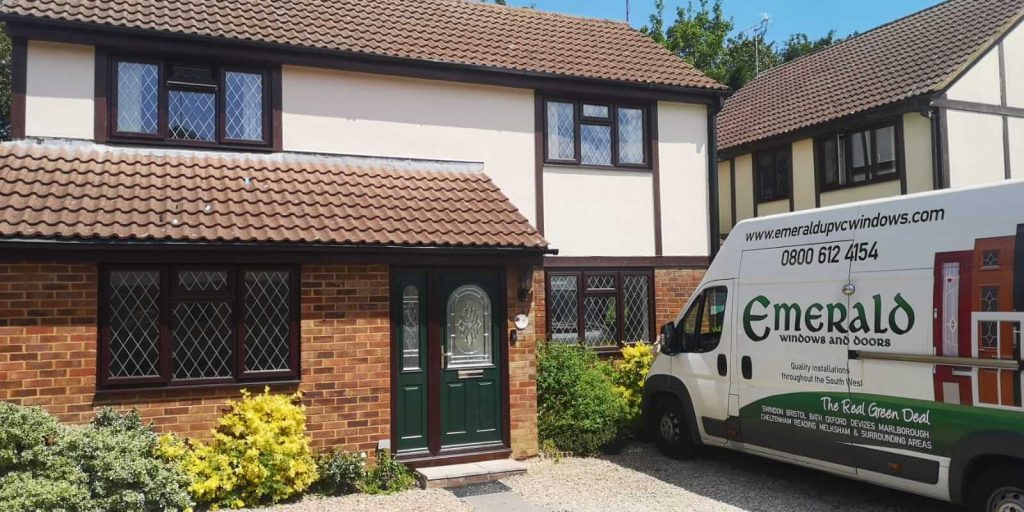
At Emerald Windows & Doors, we’ve always believed that getting a quotation should be straightforward.
That’s why we work on a first-price, best-price basis.
Rather than starting with an inflated figure and gradually reducing it through a series of discounts, we aim to provide our most competitive quotation from the outset, based on the products and installation required.
We don’t believe homeowners should have to negotiate, sit through lengthy sales pitches or make an immediate decision to receive a fair price.
Our approach is simple: understand what you’re looking for, explain the available options and provide a quotation you can consider in your own time.
We won’t always be the cheapest company, and we wouldn’t claim to be. Different installers offer different products and levels of service.
But we do believe customers deserve transparency, and that the price they’re given should reflect the genuine value of what’s being offered.
There’s nothing wrong with wanting to save money on your home improvements. New windows and doors can be a significant investment, and getting good value should absolutely be a priority.
But a £5,000 discount doesn’t necessarily mean you’ve saved £5,000.
Before accepting an offer, consider the original price, what’s included in the quotation and how it compares with other companies.
Because, at the end of the day, the best quotation isn’t necessarily the one with the biggest discount. It’s the one that offers the right products, installation and support at a fair price.
If you’re considering replacing your windows or doors, we’re always happy to discuss your options and provide a no-pressure quotation.
Get in touch with Emerald Windows & Doors to arrange an appointment.
We pride ourselves on the hundreds of customer reviews that we have collected over our many years of trading. Why not read some of our testimonials yourself, and see how our customers have rated their experience with our service.
See All ReviewsEmerald windows were brilliant. The patio door was removed and replaced with a window. All work was carried out from bricking up the outside to plastering the inside. Great work...

We worried about choosing a window company. We looked at all the usual national firms but we preferred the feel of a smaller local family run business as the rep...
Very pleased with the whole process from Mark letting us see and touch the product in the showroom in Swindon (many don't!), to a transparent price breakdown, no "buy now...

Highly recommend Emerald Windows and Doors; new Front and back doors fitted yesterday. Cannot praise Mark the Fitter enough, courteous, friendly and very helpful. Top job with attention to detail...

Emerald windows have just installed a new composite front door to our property. We are very pleased with the product and the installers were polite, professional and have carried out...